Interview with Emma: a game for learning a language through a story
Words are easier to remember when they come up in a story: you know who said them and why. That's the idea behind Interview with Emma. Below: how the game works, why a story beats a word list, and how to try it for free.
What is Interview with Emma
A visual novel about Emma, a first-year journalism student: the dorm, lectures, new friends. The characters speak the language you're learning: you hear every line and read it on screen.
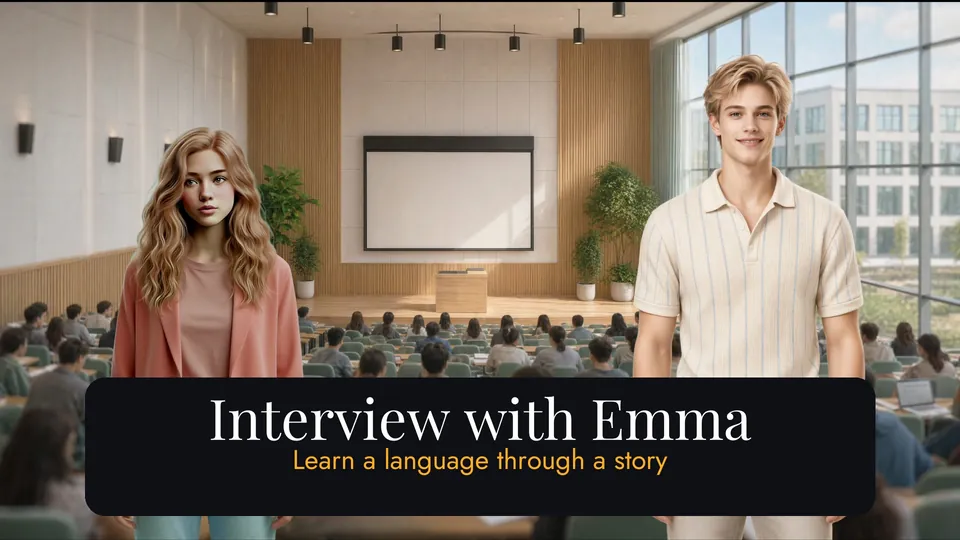
You can learn English, Spanish, French, Italian, German, Portuguese or Turkish. The interface and line translations are in your native language.
How it works
Translate any word
Tap any word in a line and you'll see its translation. No dictionary in another tab, and the story keeps going.
The words a scene teaches are highlighted. They also have a transcription and audio, so you can hear how the word sounds on its own.
Replay a line or translate it whole
Every line is voiced. The replay button plays a line again as many times as you need, and the next one won't start until you tap. If the whole sentence is unclear, one button translates it in full.
Characters that feel alive
Each character has their own voice and emotions: faces change with the lines, characters move, blink and change outfits. Tone of voice and facial expressions often make the meaning clear before you even check the translation, and the phrase sticks together with the scene.
A quiz after every scene
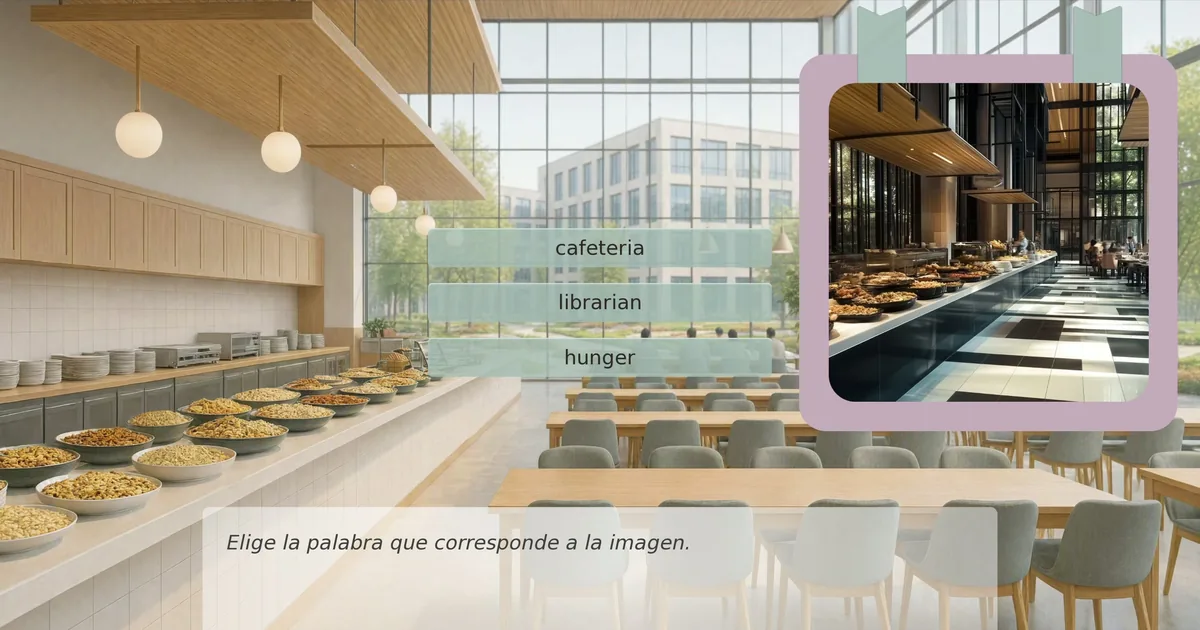
Choose a word, fill in the gap, write what you hear, match a word to a picture. Questions are in your native language, answers in the language you're learning, and some tasks are listening tasks.
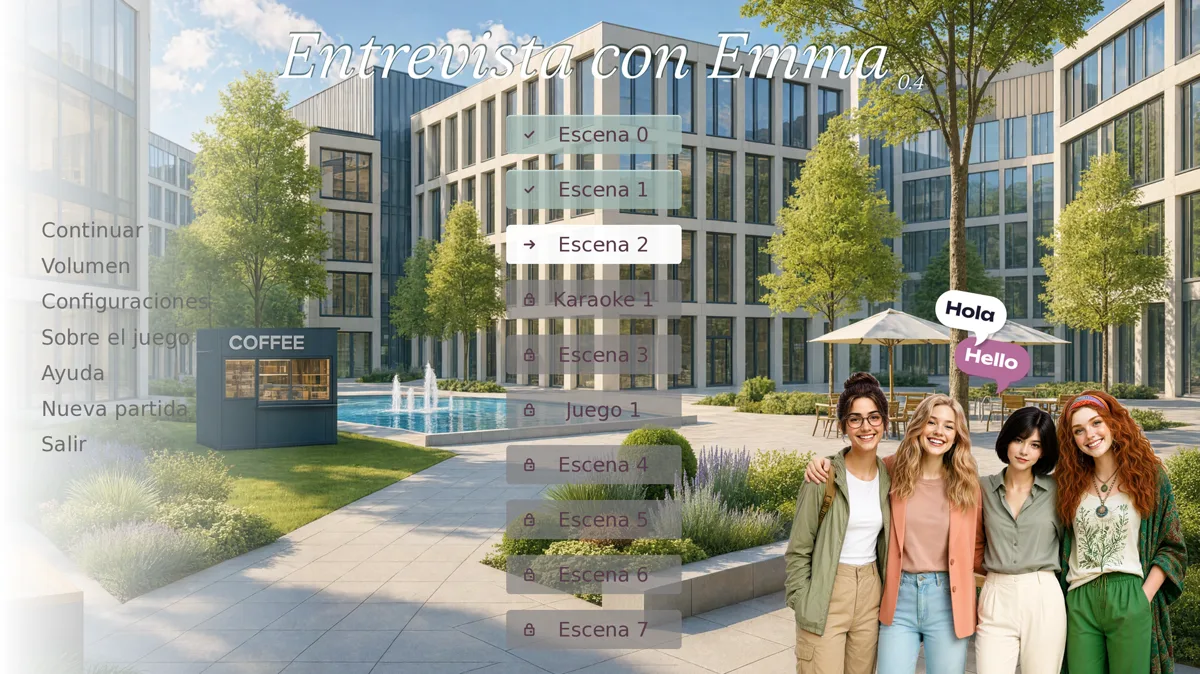
Scene map
You can replay any scene you've finished without losing your overall progress. And if you close the game halfway through, it picks up right where you left off.
The game also has karaoke with subtitles in two languages and mini-games, such as finding objects in the heroine's room by their names in the language you're learning.
Why a story beats a word list
In a word list, a phrase stands on its own. In a story it has a speaker, a situation and a mood, so the word comes back to you together with the scene. Words also repeat: in the line, in the scene's word list and in the quiz after it.
The game is similar to reading with a parallel translation: the text is in the language you're learning, and the translation is always at hand. But here you also get a lot of listening: every line is voiced, and the pictures add context that helps you understand and remember.
The game doesn't replace a textbook, but it complements it well: when grammar is familiar but spoken language is still hard to make out, a voiced story is easy to pause and replay. More on this in How to understand TV series by ear.
You can try the game for free: there's a demo on Steam and in the browser.
Questions and answers
Can you learn a language with a visual novel game?
Yes, as part of your practice: a visual novel gives you a lot of reading and listening in context, and that's where much of your vocabulary comes from. It doesn't replace grammar practice or speaking, but at the intermediate level it covers listening and vocabulary well.
Which languages can you learn in Interview with Emma?
English, Spanish, French, Italian, German, Portuguese and Turkish. The interface and line translations are in your native language.
What level is the game for?
It works best at the intermediate level: you know the basics, but spoken language is still hard to follow. Beginners can play too, but spend more time on the word list before each scene and play the first scenes with full translation turned on.
Can I try the game for free?
Yes. There's a free demo on Steam and in the browser on itch.io.